Postmodernism is both a wide-ranging movement and a period of time that advanced in the middle to late 20th century across ideology, beliefs, architecture, the arts and disapproval which distinctly made a removal from Modernism. Although, postmodernism surrounding a wide variety of developments and notions, it is usually defined by a manner of disbelief or doubt on ideologies, striking stories, and many other views of Enlightenment, plus the certainty of fair truth and complete reality, as well as notions of growth, logic, and humanity. Alternatively, it emphasises that the knowledge and truth is the aftermath of rare systems of diplomatic, social, and historic understanding and discussion, and then so created and related. So, postmodern thinking is commonly defined by movements of satire, ethical belief, and diversity. Post modernity produces sameness everywhere. (Jameson, 1991, cited in Insearch: UTS, 2016)
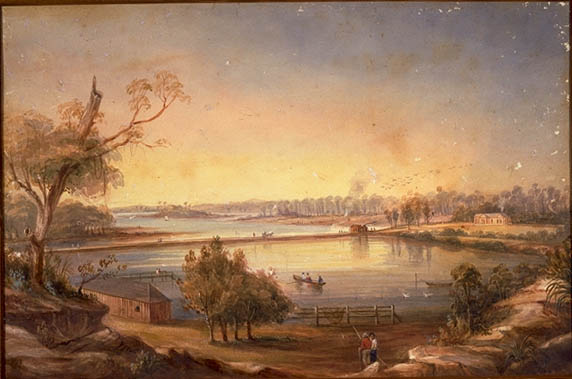
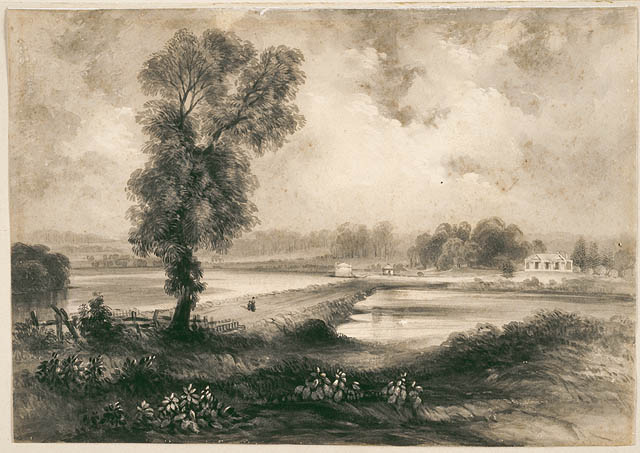
Tempe House started as Aboriginal land then into a Country Estate, Religious Community/Work Place then as residential home. It has gone trough phases of the modernist times such as capitalism which have operated to change Tempe House’s development and continuous history as a Country Estate to residency to a history monument and public park. Having said that, although Tempe House is implanted with modernist principles, it is the covenants within our postmodern civilisation, which allow it and its history to remain evident.
The Tempe House has remarkable importance with the potential to portray faithfulness in the early 19th century design principles, along with the altered elements of Mount Olympus which has unique examples of divided shrubbery, and other surviving early fabric gateposts, sundial and walling. The site has a very significant association for the last 100 years with the ‘Sisters of the Good Samaritan’ and for their plan of mature plants. Mount Olympus has a group of eucalypts which rates in arranging evidence of natural vegetation on Tempe House.Mount Olympus and the group of eucalypts, which, as a group, are rare on a local level. These are an identifiable natural landmark on the Princes Highway. (Environment NSW, 2016)


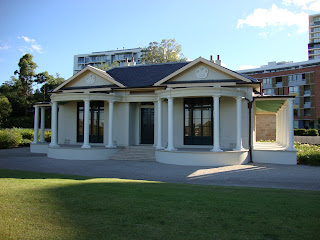
Tempe Houses’s identity and structure hold’s so much history. The design of the house starts off with the Northeast side rises bull nose edged verandahs and largely still holds the past form of the original verandah. Placed at the front of the site are fanlights and below them a two pairs of cedar French doors. Then placed on both sides of the french doors are two symmetrical windows also designed was two semi-circle like verandahs placed with four Tuscan timber columns arranged on each side of the stairway which is right in the middle. The entrance hold’s a tall and large eight panelled door. [Tanner & Associates, 2001: pp.62-63 cited on Environment NSW 2016].
Next of Verge’s design works with the Southeast side which takes you into a courtyard with only one entry. From the courtyard, you are able to see the original hipped roof which was a little portion of the original verandah but which has been modified [Tanner & Associates, 2001: p.64 cited on Environment NSW 2016].
Last but definitely not the least is the interior of the historical site. The house contains many rooms which still have french doors with the original fireplaces and throughout most of the common areas behold six panelled doors. In every room of the house, portrays the view of all the trees which fashions the site to revolve around the middle hallway. The woodwork of the cedar is also finely shaped, and is similarly designed throughout all the areas of Tempe house. The dining room and parlour both contain and have colonial marble fireplaces for the winter and French windows with large panes of glass for optimal views and gazing out into the river. There is evidence of the original floorboards in the rear rooms of the historical site [Tanner & Associates, 2001: p.76-80 cited on Environment NSW 2016].
Quotes of Postmodernism:
- Our current society has replaced all reality and meaning with symbols and signs. (Baudrillard, 1993, cited in Insearch: UTS, 2016)
- Human experience is now a simulation of reality. (Baudrillard, 1993, cited in Insearch: UTS, 2016)
- Post modernity produces sameness everywhere. (Jameson, 1991, cited in Insearch: UTS, 2016)
- Represented by the spread of capitalism and its cultural logic. (Jameson, 1991, cited in Insearch: UTS, 2016)
- Expressed in practices of pastiche and nostalgia. (Jameson, 1991, cited in Insearch: UTS, 2016)
 TEMPE HOUSE HISTORY